Setup Guide
2 minute read
This guide will help you set up Vero as a destination in the RudderStack dashboard. It also lists the configuration settings required to correctly send data from the supported sources to Vero.
Connection compatibility
| Destination Information | |||
|---|---|---|---|
| |||


In the web device mode integration, that is, using JavaScript SDK as a source, RudderStack loads the Vero native SDK from the
https://d3qxef4rp70elm.cloudfront.net/domain.Based on your website’s content security policy, you might need to allowlist this domain to load the Vero SDK successfully.
Get started
Once you have confirmed that the source supports sending events to Vero, follow these steps:
- From your RudderStack dashboard, add the source. Then, from the list of destinations, select Vero.
- Assign a name to your destination and click Continue.
Connection settings
To successfully set up Vero as a destination in RudderStack, you need to configure the following settings:
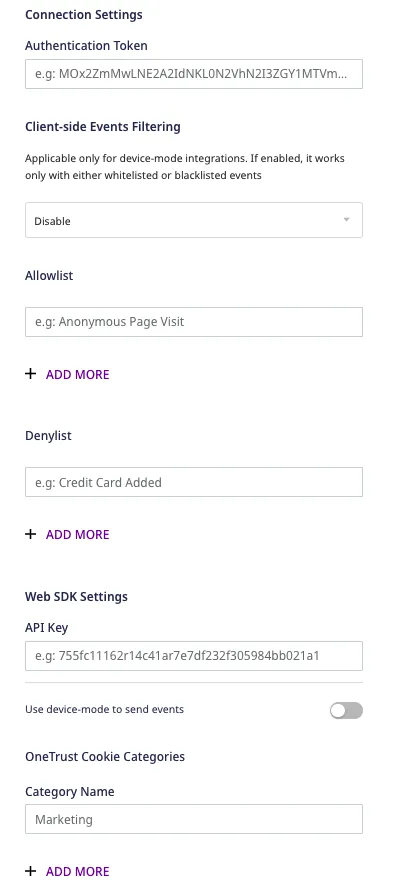
- Authentication Token: Enter your Vero authentication token.
- API key: Enter your Vero API key.
For more information on obtaining your Vero authentication token and API key, refer to the FAQ section below.
Web device mode settings
If you are sending events to Vero via web device mode, then you need to configure the following settings:
- Client-side Events Filtering: This optional setting lets you specify which events should be blocked or allowed to flow through using the SDK’s client-side event filtering feature.
- Use device-mode to send events: Enable this option to send events via web device mode.
- Consent management settings: Configure the consent management settings for the specified source by choosing the Consent management provider from the dropdown and entering the relevant consent category IDs. See Consent Management in RudderStack for more information on this feature.
FAQ
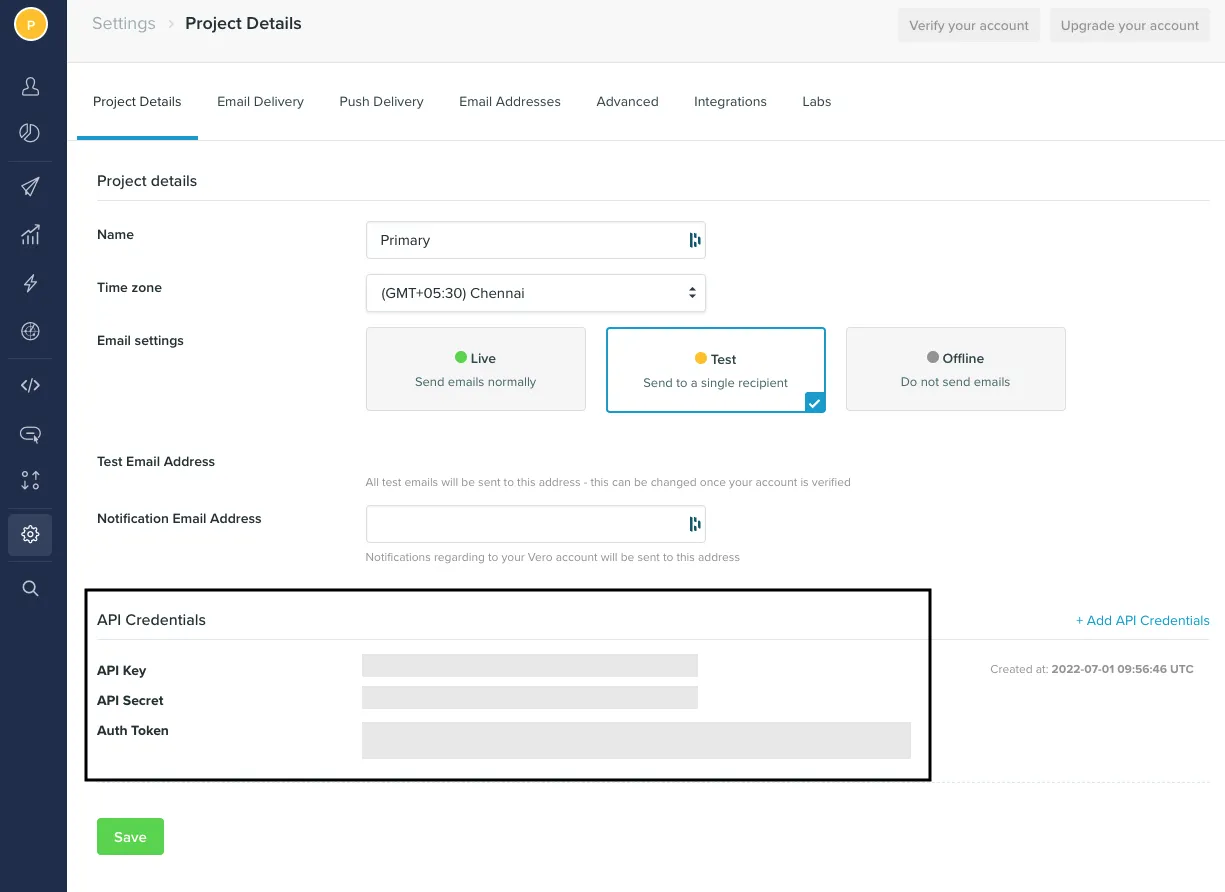
Where can I find the Vero API Key and Authentication Token?
To obtain your Vero API key and authentication token, follow these steps:
- Log into your Vero dashboard.
- In the left panel, go to Settings and scroll down to find the API Credentials section. You will find the API Key and Auth Token listed here: