Setup Guide
Send your event data from RudderStack to Drip.
2 minute read
This guide will help you set up Drip as a destination in the RudderStack dashboard. It also lists the configuration settings required to correctly send data from the supported sources to Drip.
Connection compatibility
| Destination Information | |||
|---|---|---|---|
| |||


Domain allowlisting for web device mode
In web device mode, RudderStack loads the Drip native SDK from https://tag.getdrip.com. The script path contains your account ID. Depending on your Content Security Policy, allow these sources in script-src.
You can monitor vendor scripts with a report-only Content Security Policy.
Get started
Once you have confirmed that the source supports sending events to Drip, follow these steps:
- From your RudderStack dashboard, add the source. From the list of destinations, select Drip.
- Give a name to the destination and click Next. You should then see the following screen:
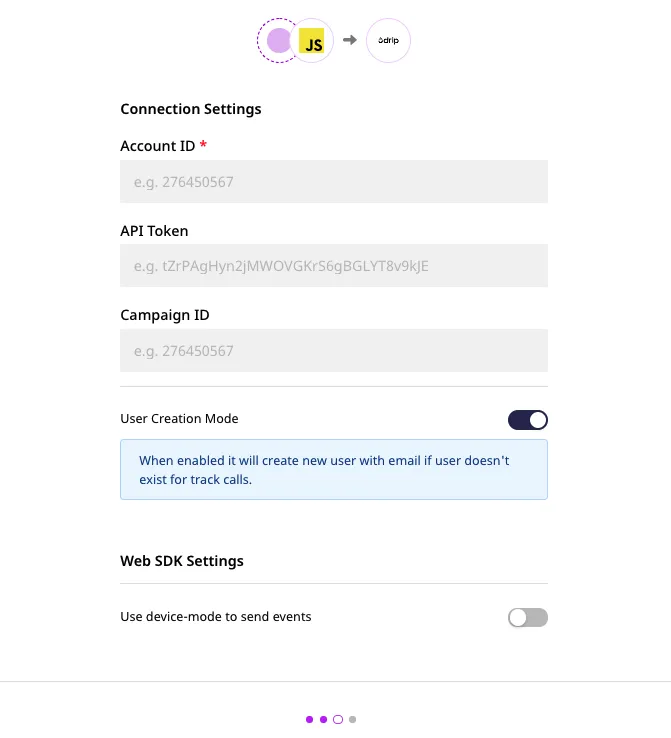
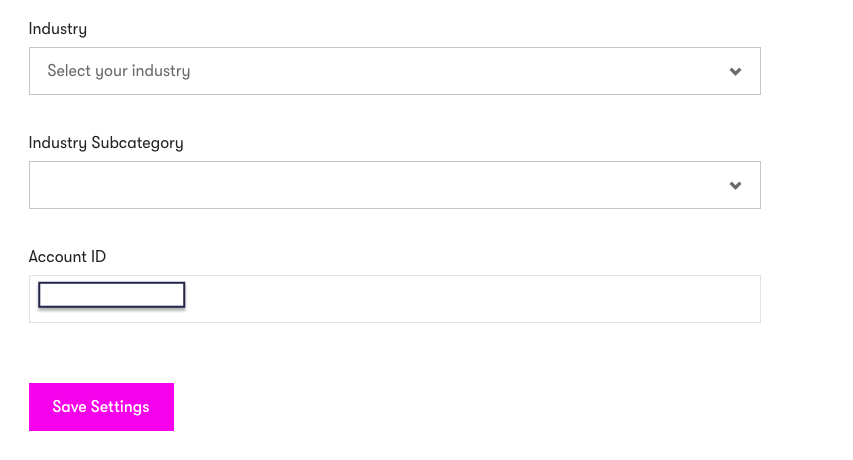
- Next, enter your Drip Account ID. To get your Account ID, sign in to your Drip dashboard and go to Settings - Account. Scroll down to see your Account ID.
- Enter your Drip API Token. To get your Drip API token, go to Settings - User Settings in your Drip dashboard.
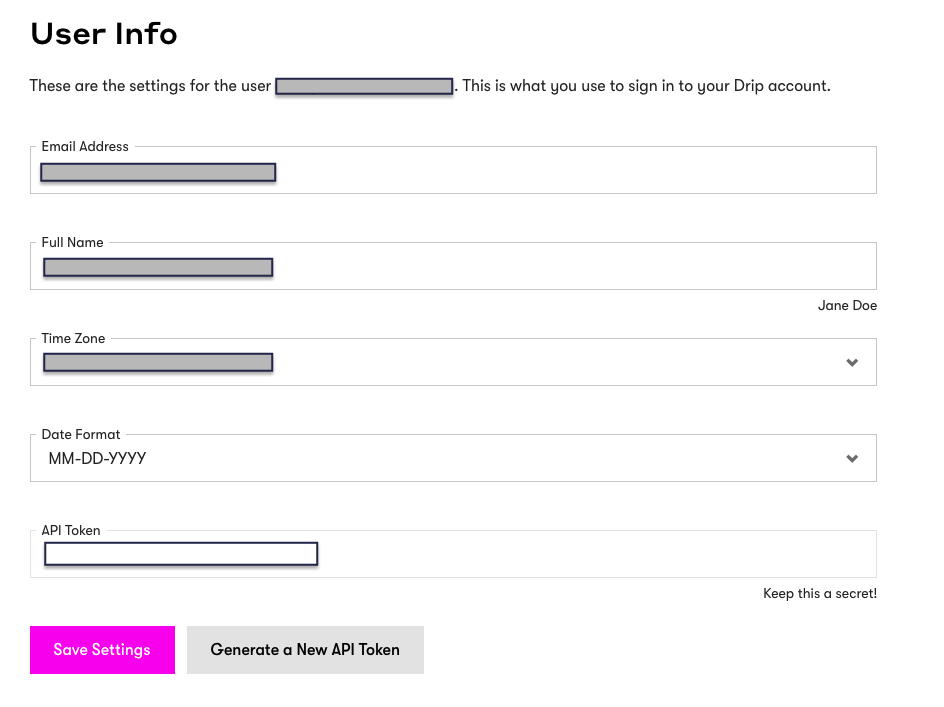
The API token is required when using cloud mode to send your data.
- Enter your Campaign ID. To get your campaign ID, go to Campaigns - Email Series and choose the relevant campaign. The last part of the URL is the campaign ID, e.g.
https://www.getdrip.com/account_id/campaigns/campaign_id.
If the Campaign ID is provided, RudderStack will try to subscribe the users by default.
You can also send your Campaign ID via theidentifycall, which takes a higher precedence.
- User Creation Mode This option lets you create the user with their
emailusing thetrackcall, if the user doesn’t already exist. - Use device-mode to send events: Enable this option to send events via the web device mode.
- Finally, click Next. That’s it! Drip will now be enabled as a destination in RudderStack.
