How to Create an Audience in RudderStack
- growth
- enterprise
4 minute read
This Audiences feature leverages the Reverse ETL workflow.
To build targeted, no-code audience segments from warehouse data and activate them downstream, use Rudder Lookout instead.
RudderStack provides a visual Audience builder tool which you can use to build audiences without any prior knowledge of SQL or how to store the data.
- Log in to your RudderStack dashboard.
- From the left navigation bar, go to Activate > Audiences and click New audience.
- Configure the settings explained in the following sections:
Select source
Select the warehouse source for which you want to create an audience. RudderStack supports the Audiences feature for the following sources:
Specify warehouse credentials
Specify the warehouse credentials to authenticate RudderStack. See the Configure warehouse credentials section of the source-specific documentation (for example, Redshift) for more details.
Specify audience name and source
Source name: Assign a name to uniquely identify the source in the RudderStack dashboard.
Configure your audience source by specifying the below fields:
- Schema: Select the warehouse schema from the dropdown.
- Table: Choose the required table from which RudderStack syncs the data.
- Primary key: Select the column from the above table that uniquely identify your records in the warehouse.
Set audience conditions
You can set the required filtering conditions, view the corresponding SQL query and preview the resultant data from your data filters:
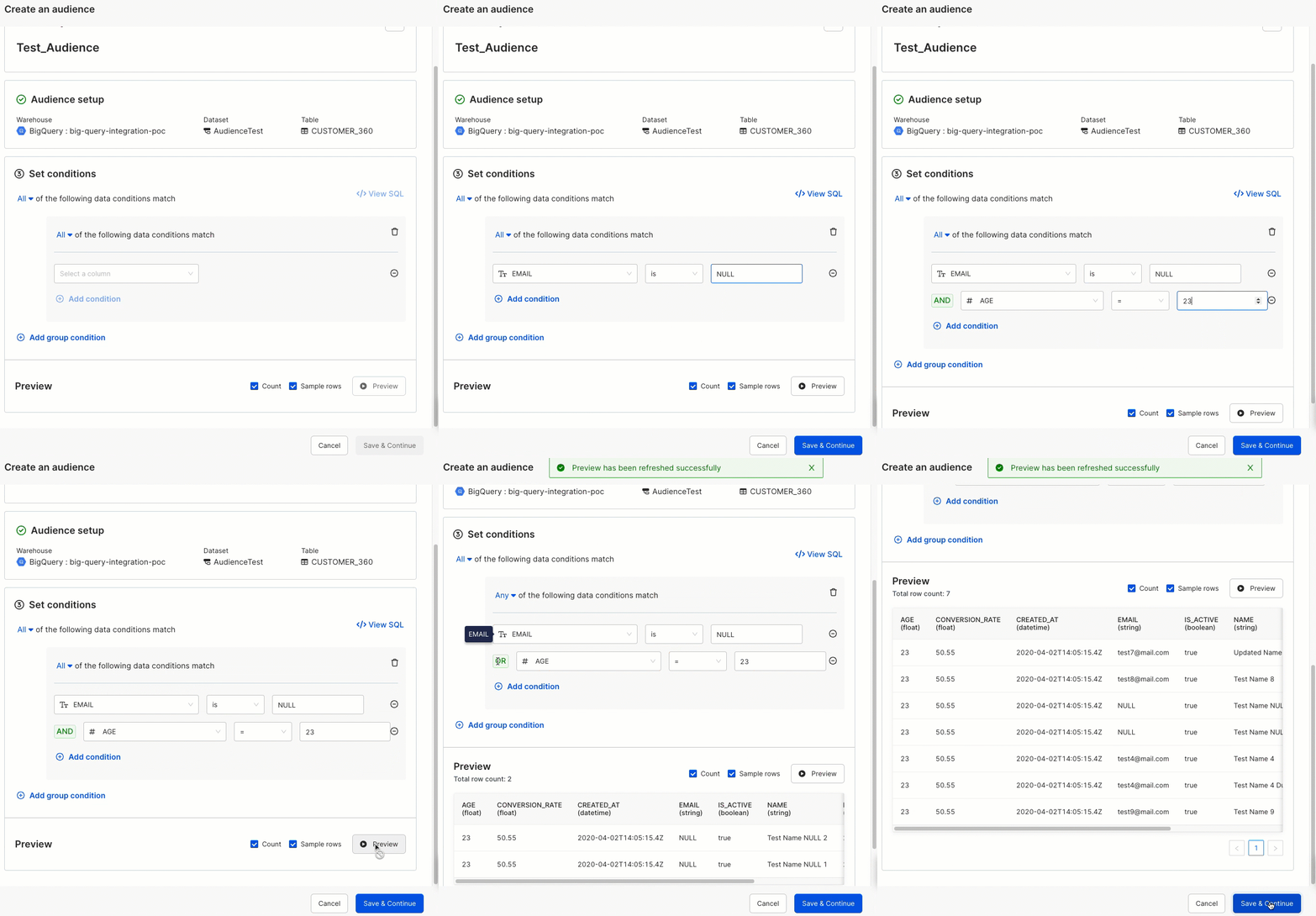
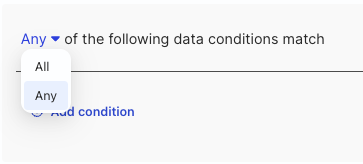
You can add multiple filters within a condition by clicking Add condition or add multiple group filters by clicking Add group condition. Select All or Any to implement the AND or OR operator respectively between different filtering conditions.
Click Preview to see the results and verify if the audience conditions are correct. Click Continue to proceed.
Review and complete setup
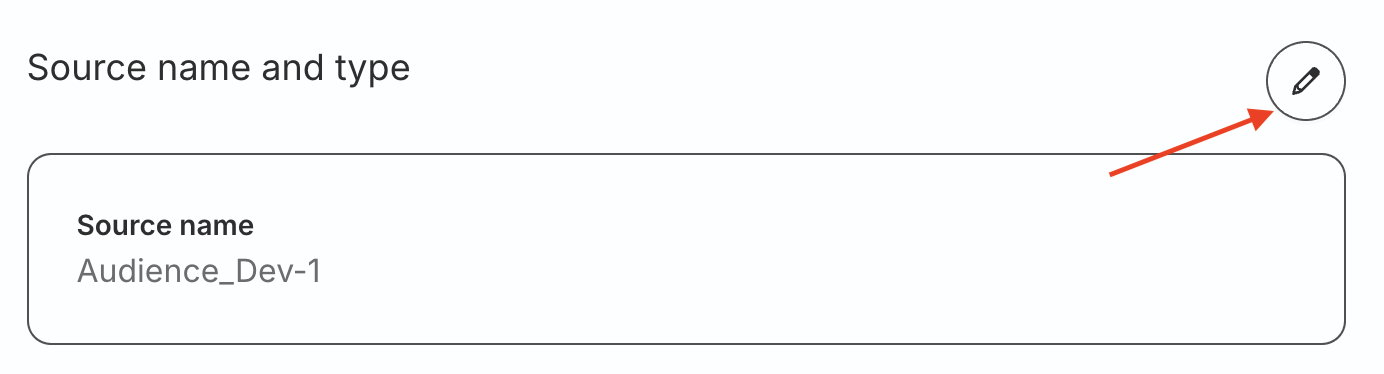
To make any changes to the warehouse credentials or audience configuration, click the edit icon present next to those sections.
Once you have reviewed your configuration, click Create source to complete the setup.
To change the source configuration, description, or filter conditions later, see How to Update an Audience.
Connect audience to destination
To start using the newly-created source, you can connect it to:
- A new destination, or
- An existing destination that is not already connected to any other source.
To connect to a destination later, click Done on the top right:
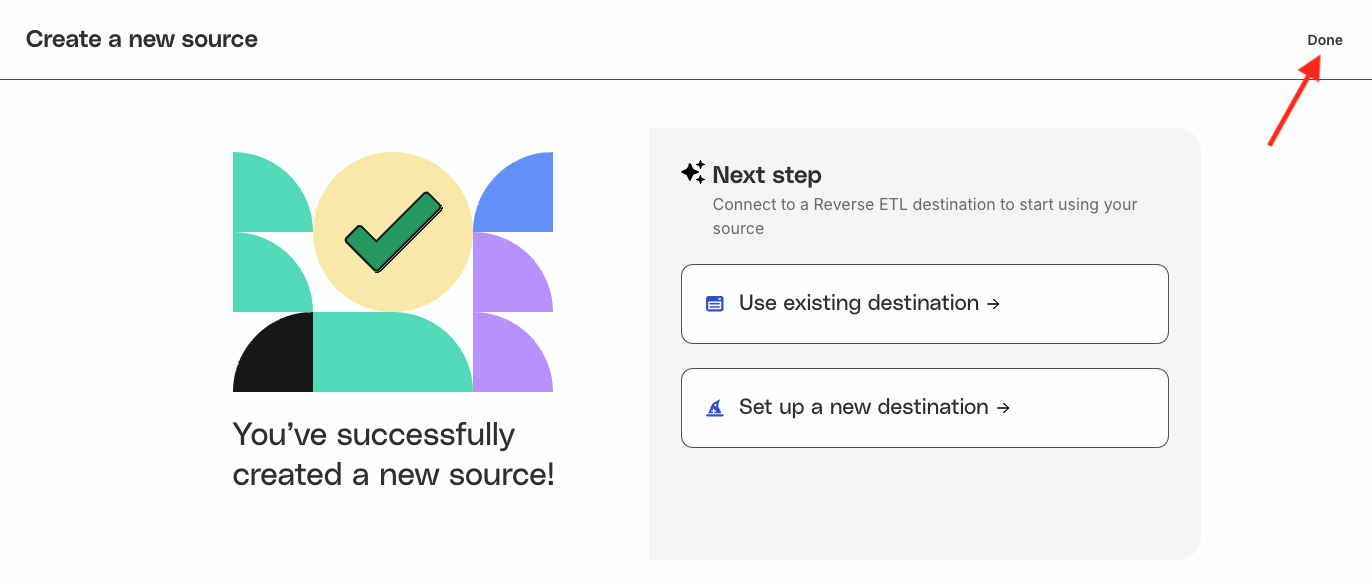
You will then be redirected to the Overview page of the source where you will see the option of connecting it to a new or existing destination.
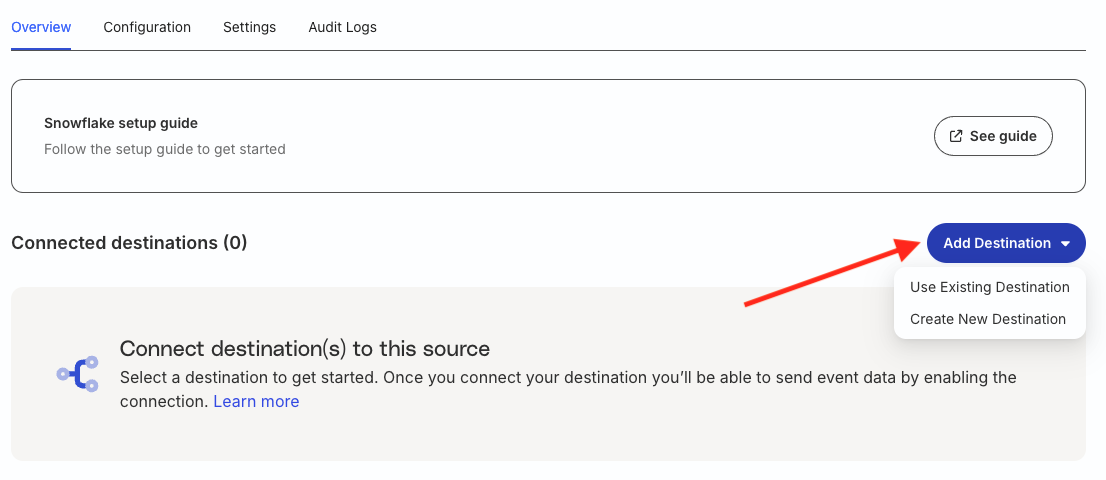
See Set up Reverse ETL Connection section for more information.
See Supported Destinations for the destinations you can connect to an audience.
When you set up data mappings, destinations that don’t support audiences by default (for example, Salesforce, Customer.io, or HubSpot) require an Audience Identifier. Facebook Custom Audience and Google Ads Remarketing Lists have audience support by default, so they don’t show this setting.
FAQ
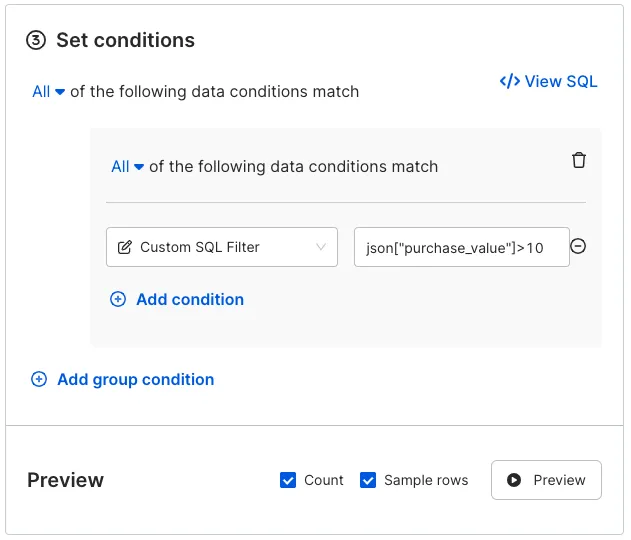
Can I create a filter on the JSON columns in my warehouse table?
Yes, you can. Select the Custom SQL filter option from the dropdown and enter the corresponding SQL query, which includes the relevant filtering condition for the JSON column:
What do the three validations under Verifying Credentials imply?
Once you proceed after entering the connection credentials, you will see the following validations under the Verifying Credentials option:
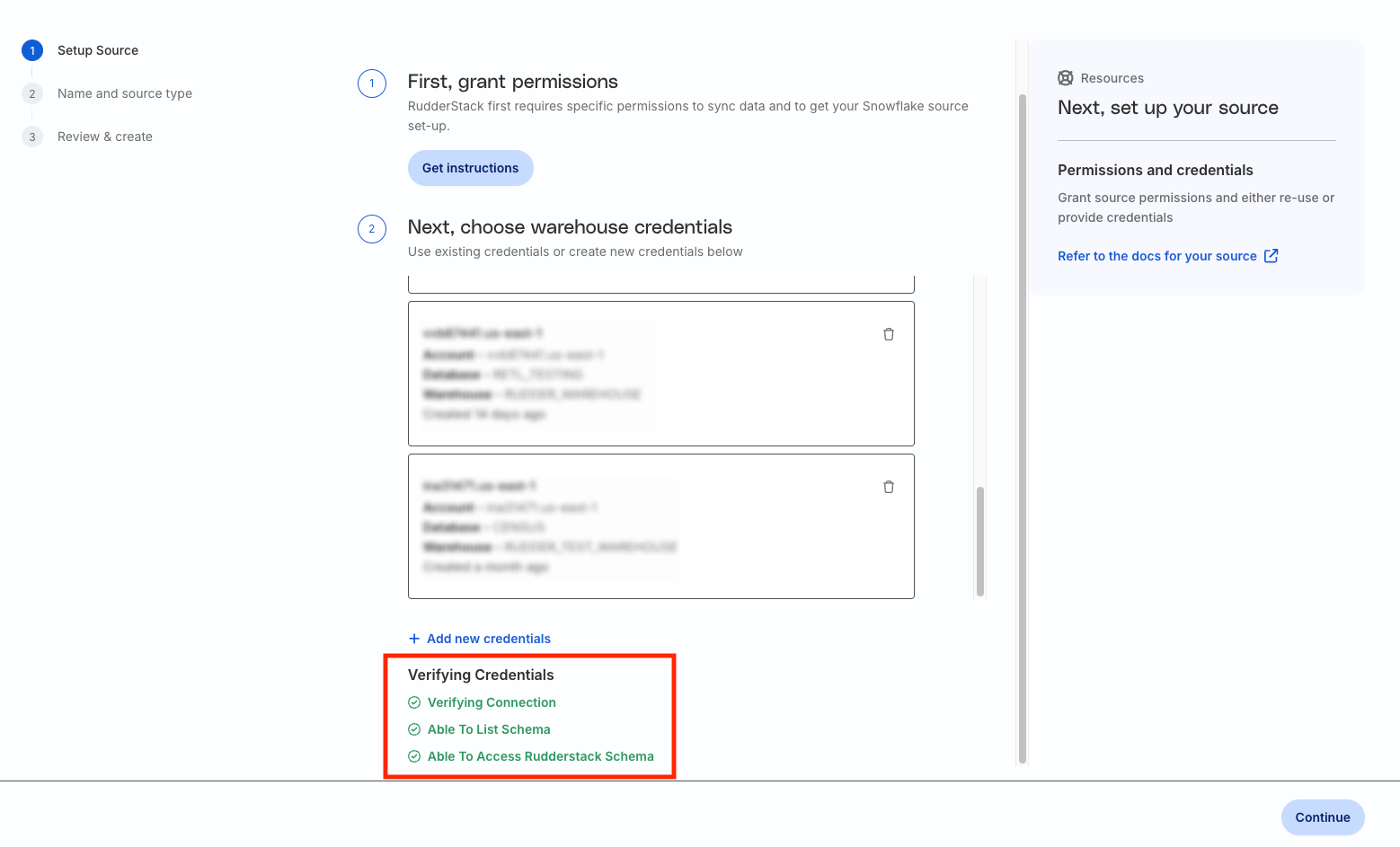
These options are explained below:
- Verifying Connection: Indicates that RudderStack is trying to connect to the warehouse with the information specified in the connection credentials.
If this option gives an error, it means that one or more fields specified in the connection credentials are incorrect. Verify your credentials in this case.
Able to List Schema: Checks if RudderStack is able to fetch all schema details using the provided credentials.
Able to Access RudderStack Schema: Checks if RudderStack has the required access to the
_RUDDERSTACK/_rudderstackschema (depending on your warehouse). To create the schema, run all commands listed in the Permissions section of the respective Reverse ETL source documentation:
If this option gives an error, verify if you have successfully created the_RUDDERSTACK/_rudderstackschema and given RudderStack the required permissions to access it.
