Audience Identifier
Learn how RudderStack maps audience membership when a destination does not support audiences by default.
Available Plans
- growth
- enterprise
less than a minute
This guide explains how RudderStack maps audience membership when a destination does not support audiences by default.
Overview
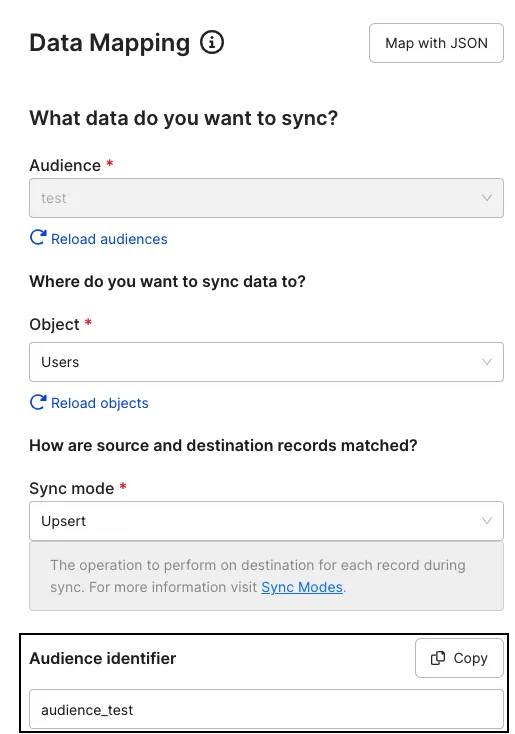
RudderStack requires an audience identifier when mapping your audience to destinations that don’t support audiences by default, for example, Salesforce, Customer.io, HubSpot, etc. It picks up this identifier from the Audience identifier setting in the dashboard while setting up the data mapping.
You set the audience identifier while connecting an audience to a destination and configuring data mappings.
Important considerations
- You will see the Audience identifier setting while connecting your audience to all the supported destinations except Facebook Custom Audience and Google Ads Remarketing Lists, which have audience support by default.
- The value of Audience identifier is pre-populated in the dashboard. However, you can change it as required.
- RudderStack sets the user traits with the provided Audience identifier as the key. It sets the value of the trait to either
trueorfalsedepending on whether the user is a member of the defined audience.
